
The Refrain and Its Changing Audience
We Have Always Lived in the CastleThis flow traces how the poisoning rhyme moves from village taunt to mob chant and finally becomes part of the strangers’ stories about the secluded sisters.
increasing Bearing strength in each event
 decreasing
Bearing strength in each eventdecreasingA Schoolyard Chant
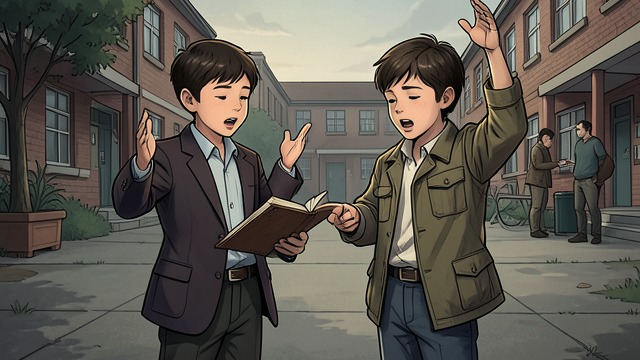
A Schoolyard Chant
The rhyme is revived
The Harris boys call to Mary Katherine and sing about Constance’s tea and the poisoning. The family tragedy becomes a compact chant children can repeat without understanding its full weight.
Adults permit the performance
Their mother gives a half-hearted instruction but allows the children to continue. The rhyme is therefore not only childish cruelty; it reflects the surrounding community’s tolerance for humiliation.
Repetition makes stigma easy to carry from one generation to another. Mary Katherine hears the chant as a coordinated expression of village hostility.
The Visitor’s Curiosity

The Visitor’s Curiosity
A rhyme’s history exposed
The guests discuss the poisoning behind the familiar schoolyard language. Julian explains the dinner and the deaths, while Mrs. Wright presses for the reason behind them.
Private harm becomes public text
The rhyme is not sung in the drawing room, but the visitors’ questions reveal the same appetite for the family’s story. Constance and Mary Katherine remain composed while others make the tragedy an object of discussion.
The refrain’s power comes partly from what it conceals. Its playful sound carries the weight of a real crime and the community’s continuing fascination with it.
The Mob’s Chorus
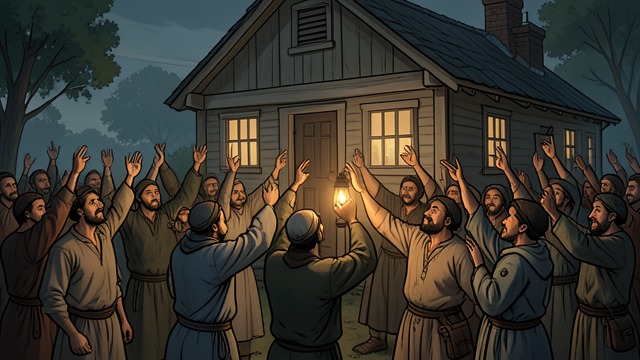
The Mob’s Chorus
A chant becomes collective
Villagers repeat the rhyme while surrounding Mary Katherine and Constance. The words once shouted by children now accompany a crowd’s attack on the house and its inhabitants.
Language as force
The sisters are forced to hear their private history returned to them in the voices of the community. The chant helps turn individual mockery into a unified performance of punishment.
The escalation reveals what repetition can do when a crowd takes it up. The rhyme no longer merely describes stigma; it helps enact it.
The Sound from the House
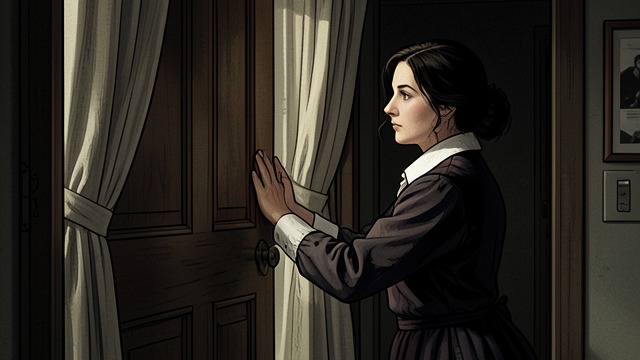
The Sound from the House
A story shouted outside
The sisters hear a visitor at the door while they hide inside their newly secured home. Voices outside repeat fragments of the old rhyme and the boneyard taunt.
Safety through withholding an answer
Constance and Mary Katherine stay silent, leaving the visitors unable to confirm what is happening inside. The words remain outside the barrier while the sisters control whether to respond.
The refrain continues as folklore even after the direct violence recedes. Silence allows the sisters to deny strangers the response they came to provoke.
A Warning for Children
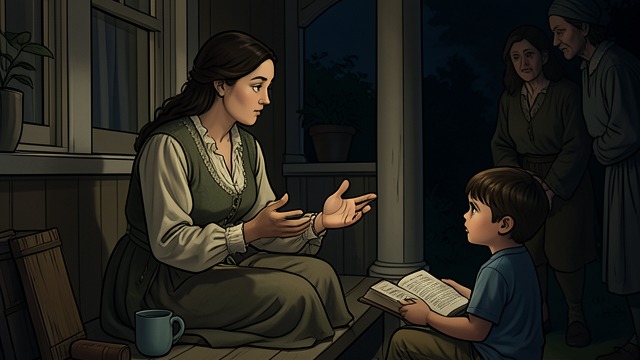
A Warning for Children
The sisters become a tale
A woman tells children that the ladies in the ruined house poison or eat children. Another adult warns the children not to approach the steps.
The story changes hands
The old rhyme and poisoning history have expanded into new legends about the sisters. The villagers’ children learn to fear the house, while also repeating the language that keeps it famous.
The sisters are now both persecuted and mythologized. Their withdrawal prevents direct contact but cannot prevent the community from inventing stories about them.
During Mary Katherine’s walk home from the Village
During Mrs. Wright’s tea visit
During the sisters’ attempted escape on the night of the fire
During the sisters’ first night back in the damaged house
Several weeks after the fire
